

Potassium Hydroxide | Potassium Hydroxide

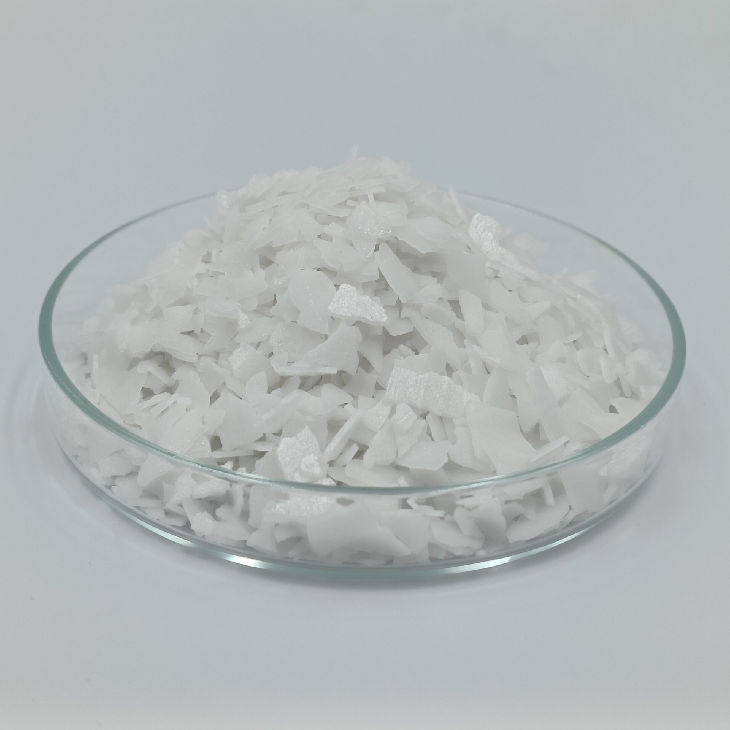
Potassium Hydroxide (KOH) has a molar mass of 56.1056 g/mol, a density of 2.044 g/cm³, a melting point of 360 °C, and a boiling point of 1327 °C. It can be used to neutralize solutions and substances that require neutralization in the absence of chlorine. Potassium hydroxide is highly alkaline and highly soluble in water. It appears as odorless, white, and irregular crystals. Other properties include solubility in alcohol and glycerol, and insolubility in ether and ammonia.
Potassium hydroxide solutions at concentrations of approximately 0.5–2% can cause skin irritation, while concentrations above 2% are corrosive.
Potassium hydroxide is used to produce other potassium compounds, such as potassium cyanide, potassium phosphates (e.g., tetrapotassium diphosphate), potassium bromate, potassium permanganate, potassium carbonate, and potassium iodate. It is also applied in the manufacture of high-quality liquid soaps, pigments, glass production, biodiesel from plant sources, and for neutralizing acidic solutions.
Potassium is also used in the manufacturing of semiconductor chips.
Properties:
|
Country of Manufacture: |
China |
|
Product Color: |
White |
|
Particle Shape: |
Crystalline |
|
Available Particle Sizes (mm): |
– |
|
Specific Gravity (g/cm³): |
2.044 |
|
Bulk Density (g/cm³): |
– |
|
Molecular Weight (g/mol): |
56.1056 |
|
Melting Point (°C): |
360 |
|
Plastic Bag (ton): |
25 |
|
Wooden Pallet (ton): |
1 |
|
Purity (%) |
>90 |


Reviews
There are no reviews yet.